What signs show they actually need mice removal right now?
They usually need action as soon as droppings, scratching in walls, or gnaw marks appear. Waiting often turns a small issue into a repeating infestation.
In Sydney, mice often move indoors during cooler months and after heavy rain. They’re also common around garages, terrace subfloors, apartments with shared service ducts, and homes near bushland edges. If they’re finding food nightly, the problem is already established and won’t resolve without intervention.
What can they achieve with DIY traps and bait from Australian hardware stores?
They can reduce numbers quickly if the infestation is small and entry points are limited. DIY works best when they combine trapping with sealing, strict food control, and mice removal Sydney strategies to address the problem more effectively.
Snap traps, enclosed bait stations, and multi-catch traps are widely available across Sydney. However, success relies on placement along runways, regular resetting, and removing attractants like pet food or pantry spills. DIY becomes less effective when mice are nesting in wall cavities, roof voids, or underfloors where they can avoid traps.
How do they choose between snap traps, live traps, and electronic traps?
They choose based on speed, safety, and how often they can monitor traps. For most homes, snap traps are the simplest and most reliable when used correctly.
Live traps require frequent checking and a plan for humane handling, plus legal and ethical considerations around release. Electronic traps can work, but they still need careful placement and routine maintenance. In busy households, they should also consider child and pet safety, using tamper-resistant placements wherever possible.
What are the real risks of DIY baiting around kids, pets, and wildlife?
The main risks are accidental access, secondary poisoning, and bait being moved into hidden areas. These risks rise in homes with dogs, curious toddlers, or outdoor wildlife activity.
Australian households should be especially cautious with bait use near possums, birds, and other non-target animals. They can reduce risk by using secure bait stations, avoiding loose pellets, and never placing bait where it could be dragged into a ceiling void. If they’re unsure, a professional approach is usually safer.
When should they call a licensed pest controller instead?
They should call when mice are active in multiple rooms, inside walls or ceilings, or when DIY efforts fail after one to two weeks. They should also call if there’s a suspected nesting site that can’t be accessed safely. Following a rodent infestation warning guide can help homeowners identify when professional assistance is needed and prevent the problem from becoming more difficult to control.
Sydney properties with complex rooflines, heritage features, or shared walls often need professional inspection and strategy. A licensed technician can identify travel paths, likely harbourage, and entry points that aren’t obvious from the living areas. For many households, mice removal Sydney services save time by addressing the cause, not just the symptoms.
What happens during a professional inspection for mice?
They typically assess activity, locate entry points, and map out harbourage areas. Then they propose a plan that matches the property layout and risk level.
In Sydney, a thorough inspection often includes the kitchen kickboards, roof void access (where safe), garage perimeters, subfloor vents, and plumbing penetrations. They may use tracking dust, motion cameras, or UV torches to confirm runways. This is where mice removal Sydney professionals often outperform DIY because the inspection turns guesswork into a targeted plan.
How do baiting programs from professionals differ from store-bought products?
Professional programs focus on controlled placement, correct bait choice, and ongoing monitoring. They usually use commercial-grade formulations and tamper-resistant stations, paired with a schedule.
Store-bought bait often fails when it’s placed inconsistently or in the wrong areas. Professionals tend to avoid over-baiting, which can cause odour issues from hidden carcasses. For households comparing mice removal Sydney options, this difference often comes down to safety, precision, and follow-up.
Can they rely on “one-off” treatments, or do they need follow-up visits?
They often need follow-up if the problem is established or if the home has multiple entry points. One-off treatments can work in mild cases, but ongoing monitoring is more reliable.
Sydney homes with subfloors, older weatherboard gaps, or attached garages can keep reintroducing mice unless exclusions are completed. Follow-ups also confirm whether bait takes are dropping and whether new activity appears. Many mice removal Sydney providers include a revisit window to adjust placements and confirm results. Homeowners can also refer to a rodent exclusion and prevention guide to understand common entry points and long-term control measures.
What is exclusion work, and why does it matter so much in Sydney homes?
Exclusion is sealing the entry points so mice can’t get back in. It matters because killing mice without sealing access leads to repeat infestations.
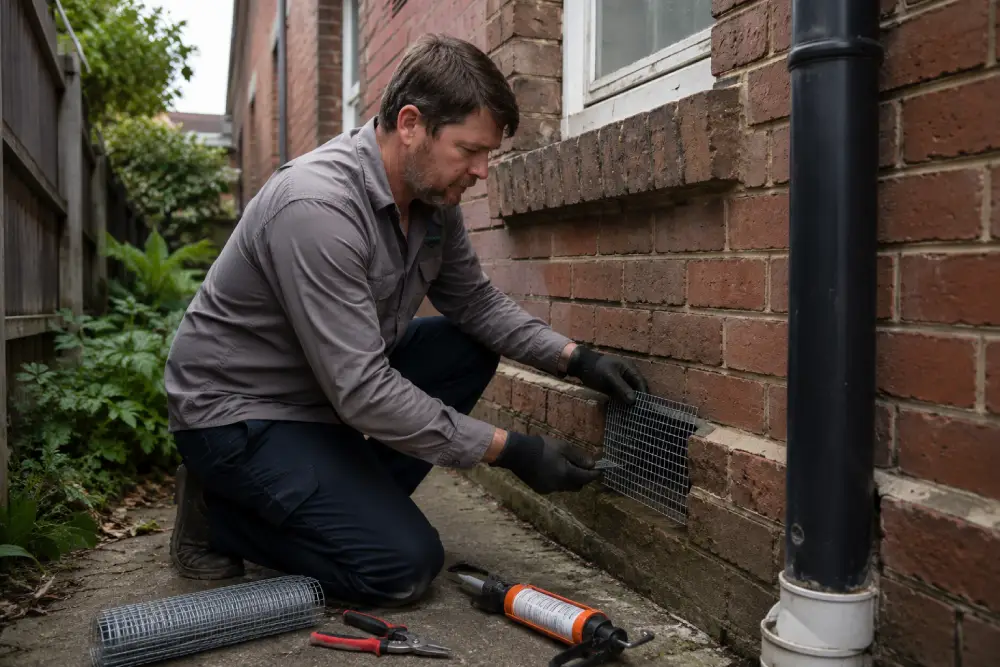
In Sydney, common entry points include weep holes, gaps around air-conditioning lines, broken vents, garage door corners, and poorly sealed pipes under sinks. Quality exclusion uses rodent-proof materials like steel mesh and durable sealants, not soft foam alone. For long-term mice removal Sydney outcomes, exclusion is often the deciding factor.
How do they compare costs across different mice removal approaches?
DIY can be cheaper upfront, while professional services often reduce long-term repeat costs. They should compare total cost over three to six months, not just the first receipt.
DIY costs add up through repeated trap purchases, bait refills, and time spent monitoring. Professional costs vary depending on property size, infestation severity, and whether exclusion is included. When comparing mice removal Sydney quotes, they should ask what’s included: inspection, number of stations, follow-ups, and any warranty terms.
What questions should they ask a Sydney pest controller before booking?
They should ask what method will be used, how safety is managed, and what follow-up looks like. Clear answers usually indicate a more professional service.
Useful questions include: Are they licensed in NSW? Will they provide a written plan? Do they include exclusion advice or onsite sealing? What are the risks for pets? How long until activity should drop? What happens if mice return? For mice removal Sydney bookings, transparency on process and aftercare matters as much as price.
How can strata apartments and townhouses handle mice differently?
They need a coordinated approach because mice can move through shared walls, service risers, and basement areas. Treating one unit alone may not solve building-wide activity.
In Sydney apartment blocks, the source can be bin rooms, loading docks, or gaps around plumbing stacks. They should report activity to strata early and request a building inspection if multiple residents notice signs. Effective mice removal Sydney in strata settings often includes common-area baiting, sealing in service rooms, and unit-level exclusion.
What role do hygiene and food storage play in stopping reinfestation?
They reduce attraction, which lowers pressure on traps and baiting. Without hygiene changes, mice keep returning to reliable food sources.
They should store dry goods in sealed containers, keep pet food in lidded tubs, and clean under appliances where crumbs collect. Outdoor factors matter too, including fallen fruit, open compost, and accessible chicken feed. For lasting mice removal Sydney results, hygiene is the easiest step that many households underestimate.

How do they deal with dead mouse odour and cleanup safely?
They should treat droppings and carcasses as contamination risks and clean using safe, controlled steps. Sweeping dry droppings can aerosolise particles, so they should avoid it.
They can ventilate the area, wear gloves and a mask, and use disinfectant before wiping. Waste should be bagged securely and disposed of properly. If an odour suggests a carcass is hidden inside a wall or ceiling, they may need professional help to locate and remove it safely. Many mice removal Sydney providers can also advise on cleanup procedures or coordinate remediation when required. Homeowners can follow rodent cleanup and prevention tips to reduce health risks and prevent future infestations.
Which option is best for fast results in an active infestation?
Professional treatment combined with targeted trapping is usually the fastest. DIY can work, but it often takes longer to identify runways and nesting zones.
If mice are seen in daylight, activity is typically high and rapid reduction becomes the priority. A professional can place stations in roof voids and subfloor zones more safely and effectively, then guide exclusion and hygiene steps. For urgent mice removal Sydney scenarios, speed usually comes from a structured plan, not more bait.
How do they choose the right mice removal option for their Sydney property?
They choose based on infestation size, safety needs, and how confident they are sealing entry points. A small, contained issue may suit DIY, while ongoing activity usually needs professional help.
As a simple rule, they can start DIY if activity is light and they can seal obvious gaps. If signs persist, spread, or involve ceilings and walls, a licensed service is a better fit. Comparing mice removal Sydney options comes down to one goal: stop current activity and block the next wave.